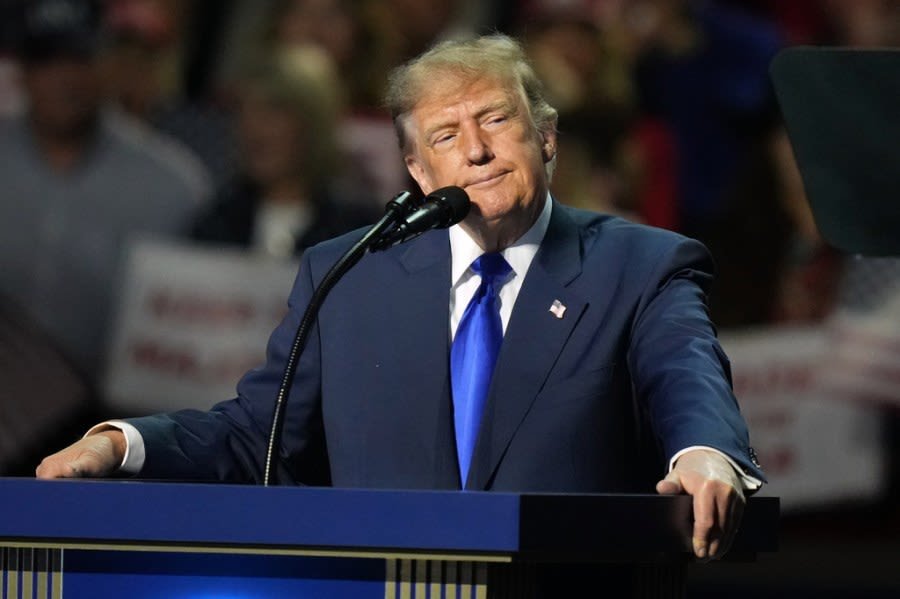
Last April, President Trump scolded Ukrainian President Volodymyr Zelensky on warfare. Trump told Zelensky, “When you start a war, you got to know you can win.”
That advice was inapt to begin with — Ukraine didn’t start the defensive war in which it is now engaged — but it has aged especially poorly.
Trump started a war with Iran this February. Now, 201 days later, he is still trying to figure out how to win. And of course, knowing you can win a war is not enough. Training, preparation, overwhelming force and violence of action win wars. By the time the order is given to the military to fight and win, all probable outcomes must have been wargamed and branches and sequels developed to counter them.
Equally as important to knowing how to win is knowing the enemy, as Sun Tzu famously wrote. The enemy always gets a vote, but “you improvise, you overcome, you adapt.” You do not hit the pause button to see if the enemy has had enough yet or to make a deal. Momentum is a force-multiplier, and start and stop tactics are the enemy of momentum.
At the onset of Operation Epic Fury, the assumption Trump made was that Iranians would rise up and “take back their country” once the upper tier of Iranian leadership had been killed. They did not — not because they did not want to, but because conditions had not been set. Adm. Brad Cooper of U.S. Central Command repeatedly urged Iranian civilians to stay in their homes as U.S. and Israeli airstrikes targeted military infrastructure.
The Basij paramilitary remained intact — the force that executed a brutal and unprecedented crackdown on protesters in January, killing as many as 36,500 civilians and arresting over 1,500.
At day 38 of the war, Trump tried to negotiate a ceasefire with Iran when it was clear the remaining second and third tier leadership were not going to capitulate to his demand of “unconditional surrender” to air power alone. His negotiating team of Steve Witkoff and Jared Kushner practically committed to give Iran’s regime $600 billion in a 14-point memorandum of understanding to reopen the Strait of Hormuz. Iran squandered that opportunity by firing on ships attempting to transit the Strait.
The White House has since shifted tactics. Economics became the instrument of national power of choice via Operation Economic Outcast. The military instrument — enforcement of a naval blockade — became the supporting effort to make the Iranian economy collapse.
But Iran had another card up its sleeve — its proxies. Shi’a militias in Iraq on Saturday attacked Saudi Arabia’s East-West pipeline, the chief alternative to sending oil through the Strait of Hormuz. Then on Sunday, Houthi rebels seized Yemen’s Red Sea coastline and the strategic island of Mayyun, once again threatening freedom of navigation and the flow of international commercial shipping through the Red Sea.
The strait between the Red Sea and the Arabian Sea, known as the Bab al-Mandeb, handles roughly 12 percent of global trade, including 11 percent of maritime oil and 8 percent of liquefied natural gas.
With the East-West oil pipeline shut down and the Bab al-Mandeb under threat of Houthi attacks, the squeeze was back on the global oil market — Iran’s only source of leverage.
So Trump has now effectively started or restarted two wars, however you want to count them them. He has not committed to seeing either to conclusion, despite having the best trained, equipped and lethal military in the world at his disposal to execute the mission. He stopped Operation Rough Rider against the Houthis on day 52 and Operation Epic Fury on day 38.
But if he wants to defeat Iran’s regime, he must attack its center of gravity — in this case, the Islamic Revolutionary Guard Corps.
Instead, despite being on the brink of victory, Trump has repeatedly opted to negotiate ceasefires and peace deals with inexperienced and naive businessmen at the helm. This has offered our adversaries time, space, and finances not only to reset and resume their nefarious activities but even to expand the war.
Trump should have someone more qualified sit across the table from Houthi and Iranian negotiators — perhaps Cooper, Secretary of State Marco Rubio, CIA Director John Ratcliffe, or Chairman of the Joint Chiefs of Staff Gen. Dan Caine.
They would deliver a clear ultimatum — “this is what you will do” — rather than ask, “What will it take?” Negotiations should carry real pressure, with consequences for any failure by Iran to keep its word.
The Trump administration learned another lesson last week: Cease-fires do not end wars. They merely set conditions to resume the fighting. Instead of to finish what you started.
Col. (Ret.) Jonathan Sweet served 30 years as a military intelligence officer and led the U.S. European Command Intelligence Engagement Division from 2012 to 2014. Mark Toth writes on national security and foreign policy. They are the co-founders of INTREP360 and the INTREP360 Intelligence Report on Substack.
Copyright 2026 Nexstar Media, Inc. All rights reserved. This material may not be published, broadcast, rewritten, or redistributed.
For the latest news, weather, sports, and streaming video, head to The Hill.