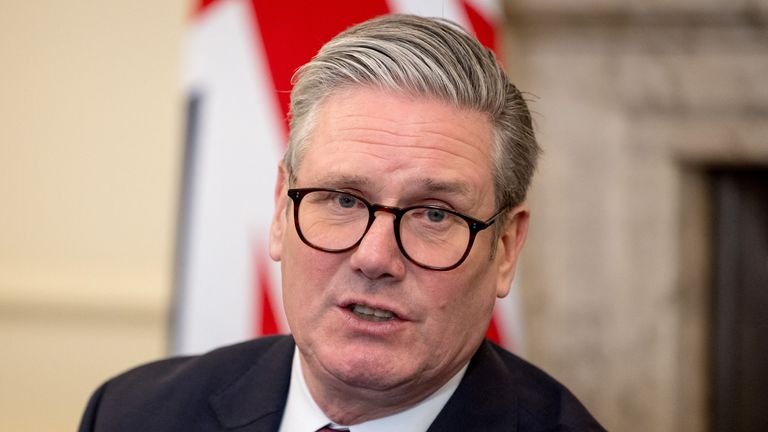
Sir Keir Starmer promised “bold changes” as he announced he will relax rules around electric vehicles after carmakers were hit by Donald Trump’s tariffs.
The prime minister said “global trade is being transformed” after the US president‘s 25% levy on imported cars, and 10% tariff on other products, came into force.
Jaguar Land Rover has said the firm will “pause” shipments to the US as it looks to “address the new trading terms”.
Trump adviser explains why tariffs put on island inhabited only by penguins
Labour made a manifesto pledge to restore a 2030 ban on the sale of new petrol and diesel cars after it had been rolled back to 2035 by Rishi Sunak’s Conservative government.
Sir Keir will officially confirm the ban in an announcement on Monday but regulations around manufacturing targets on electric cars and vans will be altered, to help firms in the transition.
Luxury supercar firms such as Aston Martin and McLaren will still be allowed to keep producing petrol cars beyond the 2030 date, because they only manufacture a small number of vehicles per year.
‘Nothing off the table’ over tariffs
Petrol and diesel vans will also be allowed to be sold until 2035, along with hybrids and plug-in hybrid cars.
The government is also going to make it easier for manufacturers who do not comply with the government’s Zero Emission Vehicle (ZEV) mandate, which sets sales targets, to avoid fines, and the levies will be reduced.
👉Listen to Politics at Sam and Anne’s on your podcast app👈
Sir Keir said: “I am determined to back British brilliance.
“Now more than ever UK businesses and working people need a government that steps up, not stands aside.
“That means action, not words.”
Officials have said support for the car industry will continue to be kept under review as the full impact of the tariffs announced last week becomes clear.
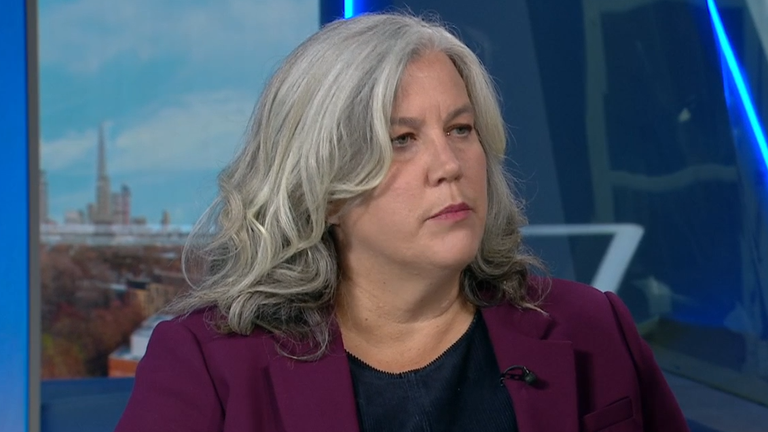
Transport Secretary Heidi Alexander said the proposed changes struck the “right balance” between cutting emissions and offering businesses support in the wake of Mr Trump’s tariffs.
Minister calls for ‘cool heads’
Speaking to Wilfred Frost on Sky News Breakfast, Ms Alexander said the UK would “rather than not be in this place” and that ministers needed to keep “cool heads” to stop the trade war escalating.
She also denied that the proposed changes were simply “tweaks”.
“It is an opportunity for the car industry to remain at the cutting edge of the transition to EVs, but it’s right that we’re pragmatic,” she said.
Read more:
Starmer pledges to shelter UK business from tariff storm
Jaguar Land Rover decision sparks anxiety in car-making hub
Mike Hawes, chief executive of the Society of Motor Manufacturers and Traders, said the government had “recognised the intense pressure manufacturers are under”, while Colin Walker, a transport analyst at the Energy and Climate Intelligence Unit, said the ZEV mandate is a “global success story” in driving a surge in sales of electric vehicles.
It comes as KPMG warned US tariffs on UK exports could see GDP growth fall to 0.8% in 2025 and 2026.
The accountancy firm said higher tariffs on specific categories, such as cars, aluminium and steel, would more than offset the exemption on pharmaceutical exports, leaving the effective tariffs imposed on UK exports at around 12%.
Yael Selfin, chief economist at KPMG UK, said: “Given the economic impact that tariffs would cause, there is a strong incentive to seek a negotiated settlement that diminishes the need for tariffs. The UK automotive manufacturing sector is particularly exposed given the complex supply chains of some producers.”